
Dismantling master narratives in the history classroom
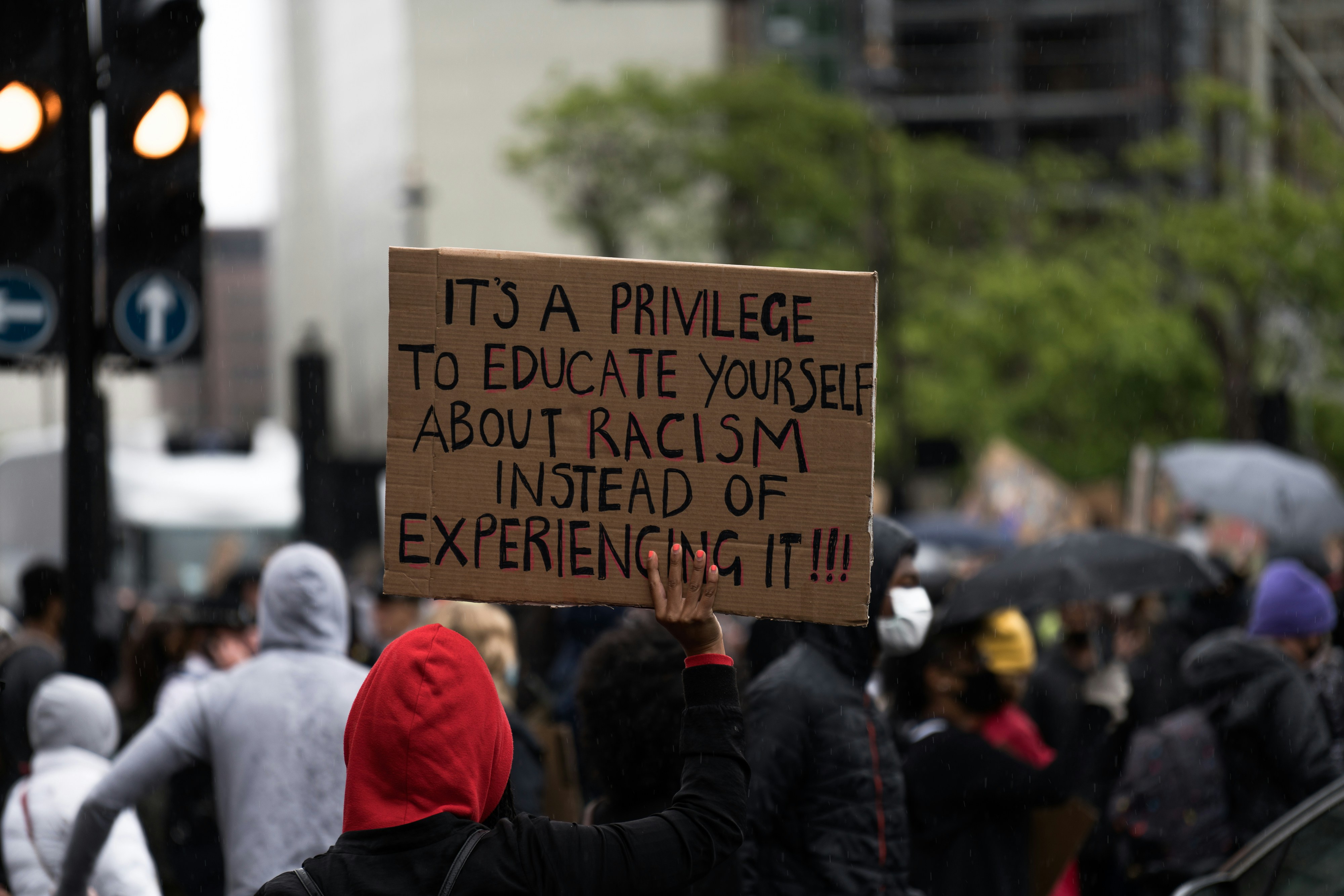
Photo by James Eades on Unsplash
Cross-posted from Centre for Education and Race Equality in Scotland (CERES) – Blog post by Christiana Fizet
Although I began my doctoral studies in 2014, the seed was planted for the idea five years earlier, in 2009. It came in the form of a statement by then Canadian Prime Minister Stephen Harper at a news conference of the 2009 G20 summit, where without batting an eye he declared, “We also have no history of colonialism. So we have all the things that many people admire about the great powers but none of the things that threaten or bother them” (O’Keefe, 2009).
While this statement was striking in its inaccuracy (Canada’s history of colonialism and genocide has been widely documented) his ability to pronounce such a falsehood on an international stage revealed the power of the self-image Canada had constructed of itself as “Canada the Redeemer” (Roman and Stanley, 1997), an image that we have successfully marketed to the world and continue to preach to our younger generations through our ‘official history’. Broadly, this ‘official history’, or what Thobani (2007) refers to as “the master narrative” of Canadian history, presents Canada as “a tolerant, multicultural society” (Razack, Smith and Thobani, 2010: ix), while the long history of colonization, genocide and racial violence is downplayed, externalized or entirely erased.
The constitutive role that forgetting plays in history has long been acknowledged and indeed highlighted by theorists of nation-building. As Haitian scholar Michel Trouillot (1995: 27) explained, “any historical narrative is a particular bundle of silences”. What is forgotten, or ‘silenced’, he further argued, must be considered in light of the different access to the production of history that different groups have. That is to say, it is not by luck or a closer approximation to the truth that certain histories come to the fore and others are ‘silenced’. History is manufactured, and the powerful have a greater say in what is given the veritable stamp of ‘history’. Official accounts of history, thus, tend to serve the powerful.
We need only look as far as the Canadian master narrative to see this at play. The silences surrounding the longstanding presence of Indigenous peoples and racialized peoples in Canada serve to depict the Canadian nation as originally white. This works to place white Canadians at the ‘core’ of the nation, while Indigenous and racialized groups are rendered “strangers to the national community” (Thobani, 2007). Likewise, the silences surrounding the brutal colonization and racist governmental policies that the Canadian state has long enacted serve to promote the myth that white domination is the product of meritocracy and not violence (Dua, Razack, and Warner, 2005). This facilitates the argument that marginalized groups are to blame for their own marginalization (Schick and St. Denis, 2005), while any actions taken by the state to rectify the injustices are regarded as benevolent.
While Indigenous and racialized activists, researchers, writers and educators have worked tirelessly to challenge this silencing and force a ‘willful remembering’ of a past that has for too long been swept under the ‘multicultural rug’, our education systems have dragged their feet. It is only in the last few years that we have some reason for hope with a number of provinces mandating rewritings of the Canadian history course and the creation of an Indigenous curriculum. More recently, in the wake of George Floyd’s murder and in response to activists’ corresponding calls to confront Canada’s anti-black racism, we have seen initial acknowledgement at the policy level that Black Canadian history has for too long been sidelined and deserves a more central place in our schools’ history curricula.
My doctoral research (Fizet, 2020) explored how to support Canadian history teacher candidates in challenging the silences of the master narrative of Canadian history and move them toward teaching a history for ‘unlearning racism’ (Ladson-Billings, 2003). Situated in Critical Race Theory, the study explored through a variety of qualitative research tools 46 Ontario history teacher candidates’ knowledges of Canadian history, views on the purpose of history education and their role as history teachers as well as how they negotiated the influence of their racial and intersecting identities. The study found that the majority of participants did not possess the knowledges, nor political impetus to successfully dismantle the master narrative. Consequently, if changes at the policy level are not accompanied by proper support for teachers—who are the ones charged with carrying forward these policy changes in their classrooms—they will amount at best to little change, and at worst to more harm.
In the space that remains, I’d like to briefly discuss some of the recommendations that I made in response to my PhD study findings, ones that while originating in a Canadian context, may be of use to Scottish teacher educators working to support history teachers in challenging the master narrative of Scottish history.
1. Develop teacher understanding of history teaching as a power-laden process
A majority of the teacher candidates in my study held depoliticized understandings of their role as history teachers, seeing themselves as neutral deliverers of the curriculum, or what Villegas and Lucas (2002: 53) term “technicians”. Teachers, whether aware of it or not, are intimately involved in the production of history by virtue of the fact that they advance certain histories and silence others through their teaching. Indeed, studies have shown that teachers’ choices on what they include and what they exclude serve to ‘produce’ certain knowledges as paramount and other knowledges as peripheral and even insignificant. Teacher education needs to begin with a basic interrogation of how knowledge is constructed and how it favours those in power. Furthermore, it must work to disrupt the relatively safe position of ‘neutral deliverer’ that many new teachers assume.
2. Push past the ‘bolt-on’ approach
The second recommendation emerged in response to a majority of participants’ views that adding more perspectives is the way forward. At first glance adding more narratives seems like an obvious step in the right direction, however, as many critical scholars have cautioned, without an “[interrogation] of the educational framework within which the interventions are being introduced” (Howard, 2014: 513) its impact is trivial. While a few more perspectives are ‘bolted-on’, the master narrative remains unchecked and unchanged, its dominant position further bolstered by the very fact that it is the narrative to which all other narratives are affixed. Challenging the silences of the master narrative, and indeed preparing teachers to be able to do this, requires nothing short of an interrogation and subsequent dismantling of the master narrative. Only then can those narratives previously silenced be given their just space, not as mere appendages but as narratives that are central to understanding Canada’s messy, complicated past and present relationship with racism and colonization.
3. Set the bar higher
A third recommendation deals directly with the lack of knowledge that a majority of participants displayed, not only of the narratives that have been silenced, but also, curiously, of the master narrative. This was understandable when I reviewed the number of Canadian history university courses that the participants indicated having completed. Nearly half of the 46 participants had taken only one to two Canadian history courses in university. When one considers research by scholars like Salinas and Blevins (2013) that highlights the role teacher’s knowledges play in whether they will confront or conform to the official curriculum, it was no surprise that the majority of participants did not seek to contest the official curriculum. Teacher education programs need to require that the prospective teachers entering their programs have a solid understanding of both the master narrative (in order to be able to identify the gaps and silences of official history) and counter narratives (in order to move beyond simply doubting the official history, to being able to challenge it).
While the above recommendations do not present a turnkey solution, they are offered as the starting point for a conversation on how to further anti-racist praxis in teacher education programs, specifically, in the history teacher education course. Together, they provide some tangible changes that can be made in order to ensure that the next generation of history teachers is both ready and willing to challenge the master narrative for what it is: just one narrative.
- References
Dua, E., Razack, N. and Warner, J. N. (2005) ‘Race, racism, and empire: reflections on Canada’, Social Justice, 32(4), pp. 1–10.
Fizet, C. (2020) Toward a History for ‘Unlearning Racism’: Exploring Ontario history teacher candidates’ knowledges, purposes and identities. PhD Thesis. University of Edinburgh.
Howard, P. S. S. (2014) ‘Taking the bull by the horns: the critical perspectives and pedagogy of two Black teachers in anglophone Montreal schools’, Race Ethnicity and Education, 17(4), pp. 494–517.
Ladson?Billings, G. (2003) ‘Lies my teacher still tells: developing a critical race perspective toward the social studies’, in Ladson?Billings, G. (ed.) Critical race theory perspectives on the social studies: the profession, policies, and curriculum. Greenwich, CT.: Information Age Publishing, pp. 1–11.
O’Keefe, D. (2009) ‘Harper in denial at G20: Canada has “no history of colonialism”’, Rabble.ca, 28 September. Available at: https://rabble.ca/blogs/bloggers/derrick/2009/09/harper-denial-g20-canada-has-no-history-colonialism (Accessed: 9 August 2014).
Razack, S., Smith, M. and Thobani, S. (eds) (2010) States of Race: Critical Race Feminism for the 21st Century. Toronto: Between the Lines.
Roman, L. G. and Stanley, T. (1997) ‘Empires, emigrés, and aliens: young people’s negotiations of official and popular racism in Canada’, in Roman, L. G. and Eyre, L. (eds) Dangerous territories: struggles for difference and equality in education. New York: Routledge, pp. 205–232.
Salinas, C. and Blevins, B. (2013) ‘Examining the intellectual biography of pre-service teachers: elements of “critical” teacher knowledge’, Teacher Education Quarterly, 40(1), pp. 7–24.
Schick, C. and St. Denis, V. (2005) ‘Troubling national discourses in anti-racist curricular planning’, Canadian Society for the Study of Education, 28(3), pp. 295–317.
Thobani, S. (2007) Exalted subjects; studies in the making of race and nation in Canada. Toronto: University of Toronto Press.
Villegas, A. M. and Lucas, T. (2002) Educating culturally responsive teachers: a coherent approach. Albany, N.Y.: State University of New York Press